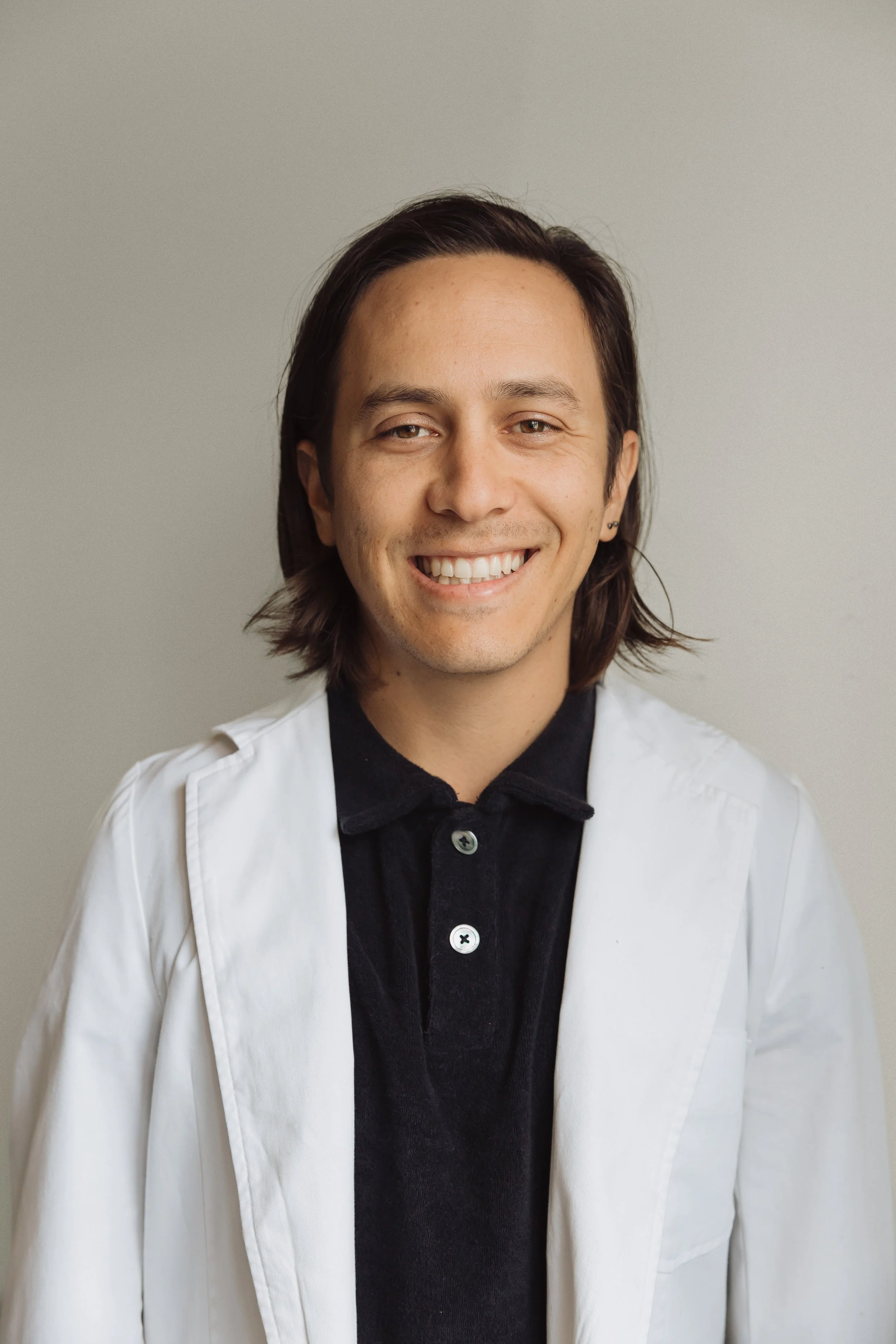
Andrew W. Barretto, LA.c, DATM

Doctor of Acupuncture and Traditional Medicine
In the Nei Jing, the foundational classic of Chinese medicine written over two thousand years ago, everything begins with a remarkably simple question.
The Yellow Emperor asks his master physician, “I have heard that in ancient times people lived to be over one hundred years old. Why is it that people today grow old and weak so much sooner?”
Qi Bo replies, “Yes — here is why.”
When people ask me why I became an acupuncturist, my first answer is usually just as simple:
I wanted to learn to live as long and happy as possible.
I started studying Traditional Chinese Medicine almost on a whim. At the time, I was exploring my own health, happiness, and consciousness, searching for principles I could integrate into everyday life. Most importantly, I wanted to use what I was learning to better care for the people I love.
I graduated with a Master’s in Science of Oriental Medicine and a Doctorate in Acupuncture and Traditional Medicine from Dongguk University Los Angeles where I was taught with a strong emphasis in integrating traditional medicine with modern science and conventional healthcare. That balance continues to shape how I understand and practice medicine today.
Exploring my own consciousness and mental health is what got me into acupuncture. Yet when I got to acupuncture school, my clinical training focused heavily on neuromuscular-skeletal pain. One of my teachers, an orthopedic specialist, once told me, “If you want to make people happy, learn to take their pain away.” That lesson has stayed with me ever since.
Healing is never just physical or psychological. The mind and body continually shape one another, and neither exists in isolation. Beyond treating symptoms, we have to ask how a person is living. Health is not simply the absence of disease — it is the capacity to participate fully in life.
I have dedicated myself to understanding health and happiness through the complementary lenses of nature and science. I have found that no matter your condition, there is always an opportunity to reduce suffering, improve function, cultivate resilience, and regulate self healing.
Educating my patients on how to understand their own mind and body is essential to how I practice medicine. I am whole-heartedly invested in everyone learning to live a long and happy life in whatever way actually works. Myself included.
Meditation and Movement
In 2015, I had just finished a weeklong silent meditation retreat and said to my teacher, “I think I want to study acupuncture. I would be starting my entire life over. Do you have any advice?” He replied with a question, “What would be best for your mindfulness practice?”
The answer was clear and immediate. Seeking to understand the nature of mind and body through direct experience has been, and continues to be, profoundly important in my healing journey. Aside from Traditional Chinese Medicine, nothing has impacted my health and happiness more than Buddhist meditation. Through my relationship with the Dharma, I have experienced very real glimpses of awakening that have unlocked genuine acceptance and compassion for the truth of the way things are. My meditation practice was a vital first step in unlocking a deep curiosity within me to understand more about the mind-body connection.
Since studying “TCM,” Taoism has opened my eyes even further to just how many ways one can cultivate inner harmony and vitality. Studying Taoism and practicing its healing arts have become fundamental influences in how I look at health and happiness.
For the last several years, I have had many opportunities to share these practices in many different settings. I have seen firsthand how meditation and mindful movement can bring healing and harmony to the mind and body. Sharing these practices has deepened my own dharma practice in ways I am very grateful for.
We in the West are relentlessly conditioned by excess - way too much consumption and way too much exertion. Slowing down and increasing awareness calms the nervous system and regulates the body’s natural healing processes. As such, mindfulness and stillness are key attributes in all my treatments.
Psychedelic Integration
Since 2016, I have had the privilege of supporting a wide range of entheogenic and psychedelic medicine communities. Like many others, these experiences profoundly shaped my understanding of health, happiness, consciousness, and what it means to heal.
To be honest, I would not be the person I am today without psychedelics. They were my entry point into exploring consciousness and learning how to hold space for healing —first for myself, and eventually for others. Over the years, I have witnessed hundreds of people from many different backgrounds navigate profound transformation through both the responsible and irresponsible use of these medicines. Those experiences deepened my curiosity about who we are, why we suffer, and how meaningful change occurs.
I believe it is important that we speak more openly and honestly about altered states of consciousness, the good and the bad. Offering psychedelic integration is a reflection of my own journey. I would not be where I am today without the guides, mentors, and communities who helped me understand and integrate the insights I gained from these experiences.
Working alongside psychedelic communities across the country taught me one lesson above all else: the experience itself is only the beginning. Lasting transformation comes through integration — the ongoing process of translating insight into healthier beliefs, wiser decisions, and sustainable changes in daily life. Integration Clinic is, in many ways, an homage to that realization.
Healing Art & Medicinal Media
Before practicing acupuncture, I studied film and worked in production. Storytelling and art remain fundamental to how I understand both the meaning of life and the practice of healing.
We are, in many ways, the authors of our own mythology.
“Health” is the ability to express our authentic nature and participate fully in our own story.
“Healing” is a return to our natural self. Creating the conditions for that experience is what I think of as the Art of Healing.
Art has a unique ability to help us reframe our experiences, challenge our assumptions, and imagine new possibilities. In the same way, I believe how we experience treatment matters just as much as the treatment itself.
Seeking healing is itself an act of imagination and creativity. It begins with the belief that tomorrow can be different than today. As part of Nature, we are shapers and creators. Our lives are works in progress.
To all my patients, thank you for letting me be a part of your story. Thank you for being a part of mine.
Everything is Qi
From the perspective of traditional medicine, happiness and health is achieved by subtle cultivation over an entire lifetime. We’re in it for the long haul. Keep going!
In ancient Taoist texts it says there are over “10,000 ways” to live over 100 years. With the right perspectives and practices, everything is medicine.
— Sincerely Yours, Andrew
Credentials and Experience
Graduated Summa Cum Laude from Dongguk University Los Angeles with a Doctorate in Acupuncture and Traditional Medicine (DATM) & a Master’s in Science of Oriental Medicine (MSOM)
Licensed Acupuncturist in the state of CA
Psychedelic Support for Fireside Project since 2022
Patient Care Advocate for Heading Health Ketamine and TMS Clinics since 2025
Certified Taoist Meditation Teacher from International Taoist Meditation Institution, College of Tao
Retreat Manager for Insight Meditation Center, Santa Cruz, CA
7 years of experience across California, Utah, and Hawaii sharing Qi Gong Exercises, Mindfulness Practices, Healing Sound Experiences, and Psychedelic Harm Reduction & Integration Support for meditation and entheogenic medicine retreats